
Forest Therapy in Hämeenlinna: Healing Among the Trees of Aulanko
On some days, stepping under the tall pines of Aulanko feels like exhaling after a long hold. The ground softens, the air smells clean, and the world slows down. Many people call this forest therapy a gentle, approachable way to restore our minds and bodies by spending unhurried time in nature. The idea isn’t complicated or mystical. It’s simply about being present in the forest, using our senses, and letting nature do what it’s always do.
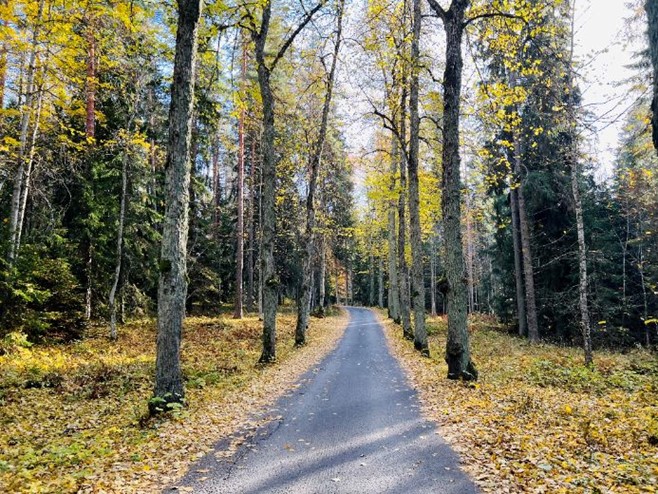
Aulanko’s tree‑lined path in autumn
What is “forest therapy”?
Forest therapy (often linked to Japan’s practice of shinrin‑yoku, ‘forest bathing’) invites us to move slowly, notice what we see, hear, smell, and feel, and let our attention settle. It’s not exercise or sightseeing; it’s an unrushed, sensory visit to a forest, alone or guided, that helps us ground ourselves in the present moment. The approach was named in Japan in the 1980s and has since spread worldwide.
Why does it help?
Spending time among trees has been shown to lower stress hormones, gently reduce heart rate and blood pressure, and support relaxation, effects demonstrated in multiple field studies comparing time in forests versus urban settings. Some research suggests the forest’s natural aromatic compounds may nudge our immune system, increasing ‘natural killer’ cell activity that helps the body defend itself, in studies, this boost can last days or even weeks after a forest visit. While we still need more rigorous, long‑term trials, the pattern across many studies is promising. Large reviews of green space and health also link regular time in nature with better self‑reported health and lower risks for several chronic conditions again, not as a cure, but as one helpful piece of everyday wellbeing. For everyday life, one practical benchmark is simple: people who spent about 120 minutes per week in nature reported better health and wellbeing in a large UK sample. That can be one longer visit or several short ones across the week.
How often is “enough”?
There’s no perfect number, but a practical aim is two hours of nature time per week, spread however suits you. Regular short visits often fit better into real life than rare, long trips and the benefits tend to add up.
Accessibility and safety
Choose routes that match your energy and the weather; Aulanko includes accessible paths suitable for prams and wheelchairs. In winter, favor wider trails and daylight hours; let someone know your route. Forest therapy complements not replaces medical care. If you live with a certain health condition, feel free to select and choose the duration to what feels comfortable.
A gentle, guidance for a forest session (30–60 minutes)
• Arrive unrushed. Put your phone on silent. Pick a loop or a short out‑and‑back path, no need to cover much distance if you do not want.
• Start with breath and senses. Stand still for a minute. Notice three things you can hear (wind, birds, water), three you can see (shapes, light, color), and three you can feel (air on skin, ground underfoot, bark texture).
• Walk slowly. Let your attention wander no goals. If a spot feels inviting, pause or sit. Watching sunlight through leaves in a classic, calming focus.
• Smell the forest air. Take a gentle, unforced breath, forests contain natural plant compounds that contribute to that “clean” scent many of us enjoy.
• Close with gratitude. Before you leave, name one small thing that brought you ease (a bird call, the feel of moss, the view). This helps the experience “stick” in memory.
Hämeenlinna’s advantage: Aulanko on your doorstep
If you live in Hämeenlinna, you don’t need to travel far. The Aulanko Nature Reserve blends romantic forest landscapes, lakes, historic viewpoints, and accessible trails, making it an ideal place to try forest therapy. Its part of Finland’s first National Urban Park and has been welcoming visitors for over a century. Trails range from wide sand paths suitable for prams or wheelchairs to more rugged routes, and the iconic Aulanko Observation Tower offers sweeping views, when open during the summer season.
Seasonal notes for Aulanko
Spring & Summer: Gentle paths, wildflowers, and long light, easier to linger and listen. The tower typically opens from Mother’s Day to late October; check local updates.
Autumn: Colors, cooler air, and crisp scents. Short sessions still work on busy days.
Winter: Snow hushes sound, even a 15‑minute sensory walk can reset your day. Dress warm, choose wider paths, and enjoy the stillness.
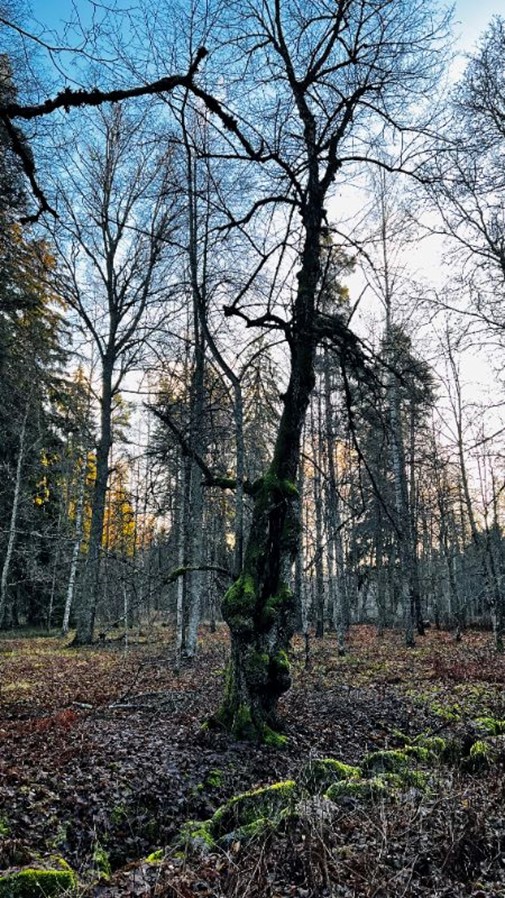
Mossy old tree in winter light, Aulanko
Forest therapy and public health: Finland’s perspective
Finland has been exploring nature‑based wellbeing for years, even piloting ‘health forests’ near healthcare centers for guided walks. Early Finnish studies report clinically meaningful improvements in participants’ mental wellbeing after a series of forest sessions. National assessments suggest nearby nature could help reduce the burden of chronic disease, especially stress and depression, while offering significant economic value if integrated widely into daily life and care.
Respecting nature: simple rules (especially in a nature reserve)
Finland’s Everyone’s Rights lets everyone enjoy forests and pick berries or mushrooms (as long as they’re not protected species), with common sense responsibilities not to disturb people or damage nature. However, nature reserves have special rules: in Aulanko, camping and overnighting are prohibited, open fires are forbidden, and dogs must be leashed; always follow posted instructions.
Forest therapy into daily life
Small/shorter events: Even five minutes of mindful short walk can help.
Merge with daily routine: Add a forest pause before works, after works, or on weekends with family.
Keep it easy and simple: Special gears may not require, curiosity is enough.
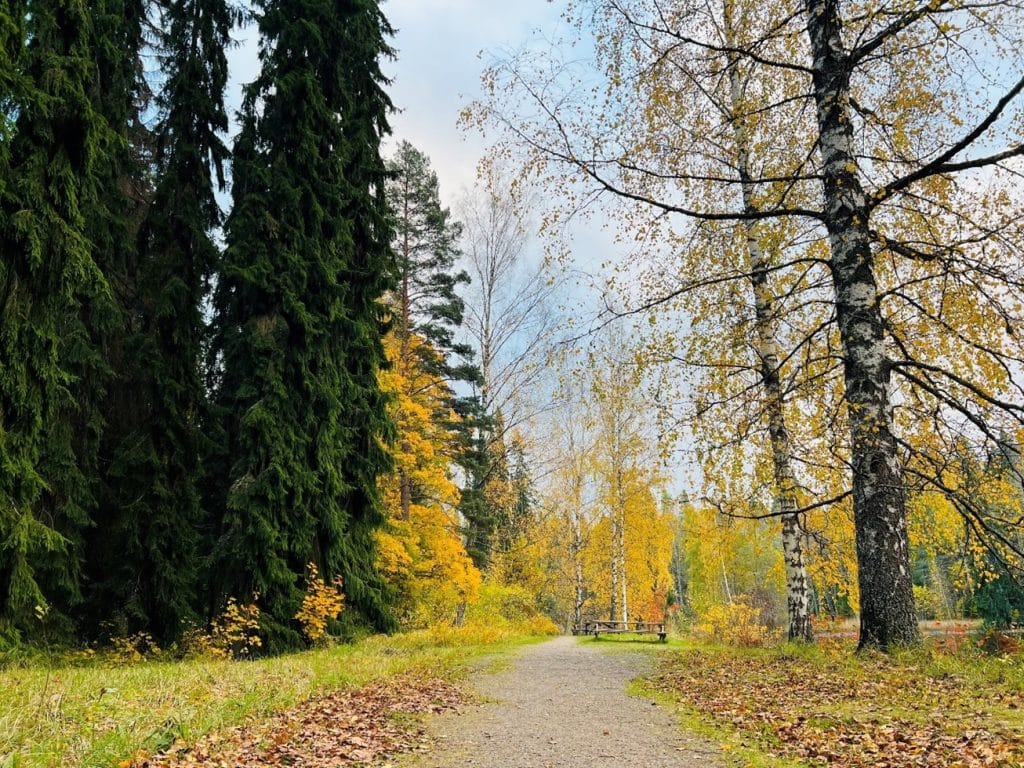
Autumn path at Aulanko
Enjoy the forest—and protect it for those who come after us. Aulanko has a way of settling us when we slow down and listen. Let’s return that kindness by leaving only our footprints, staying on marked paths, keeping dogs leashed, skipping fires, and packing out whatever we bring in. Our small, respectful actions keep the forest healthy, so it can keep welcoming us, and everyone who follows, year after year.
Aruna Sampath
A sustainability enthusiast, passionate about sustainable development and positive change
What else can you do at Aulanko? Check out tips here: Aulanko – The Beauty of Finnish Nature
Forest Therapy in Hämeenlinna: Healing Among the Trees of Aulanko
On some days, stepping under the tall pines of Aulanko feels like exhaling after a long hold. The ground softens, the air smells clean, and the world slows down. Many people call this forest therapy a gentle, approachable way to restore our minds and bodies by spending unhurried time in nature. The idea isn’t complicated or mystical. It’s simply about being present in the forest, using our senses, and letting nature do what it’s always do.
Aulanko’s tree‑lined path in autumn
What is “forest therapy”?
Forest therapy (often linked to Japan’s practice of shinrin‑yoku, ‘forest bathing’) invites us to move slowly, notice what we see, hear, smell, and feel, and let our attention settle. It’s not exercise or sightseeing; it’s an unrushed, sensory visit to a forest, alone or guided, that helps us ground ourselves in the present moment. The approach was named in Japan in the 1980s and has since spread worldwide.
Why does it help?
Spending time among trees has been shown to lower stress hormones, gently reduce heart rate and blood pressure, and support relaxation, effects demonstrated in multiple field studies comparing time in forests versus urban settings. Some research suggests the forest’s natural aromatic compounds may nudge our immune system, increasing ‘natural killer’ cell activity that helps the body defend itself, in studies, this boost can last days or even weeks after a forest visit. While we still need more rigorous, long‑term trials, the pattern across many studies is promising. Large reviews of green space and health also link regular time in nature with better self‑reported health and lower risks for several chronic conditions again, not as a cure, but as one helpful piece of everyday wellbeing. For everyday life, one practical benchmark is simple: people who spent about 120 minutes per week in nature reported better health and wellbeing in a large UK sample. That can be one longer visit or several short ones across the week.
How often is “enough”?
There’s no perfect number, but a practical aim is two hours of nature time per week, spread however suits you. Regular short visits often fit better into real life than rare, long trips and the benefits tend to add up.
Accessibility and safety
Choose routes that match your energy and the weather; Aulanko includes accessible paths suitable for prams and wheelchairs. In winter, favor wider trails and daylight hours; let someone know your route. Forest therapy complements not replaces medical care. If you live with a certain health condition, feel free to select and choose the duration to what feels comfortable.
A gentle, guidance for a forest session (30–60 minutes)
• Arrive unrushed. Put your phone on silent. Pick a loop or a short out‑and‑back path, no need to cover much distance if you do not want.
• Start with breath and senses. Stand still for a minute. Notice three things you can hear (wind, birds, water), three you can see (shapes, light, color), and three you can feel (air on skin, ground underfoot, bark texture).
• Walk slowly. Let your attention wander no goals. If a spot feels inviting, pause or sit. Watching sunlight through leaves in a classic, calming focus.
• Smell the forest air. Take a gentle, unforced breath, forests contain natural plant compounds that contribute to that “clean” scent many of us enjoy.
• Close with gratitude. Before you leave, name one small thing that brought you ease (a bird call, the feel of moss, the view). This helps the experience “stick” in memory.
Hämeenlinna’s advantage: Aulanko on your doorstep
If you live in Hämeenlinna, you don’t need to travel far. The Aulanko Nature Reserve blends romantic forest landscapes, lakes, historic viewpoints, and accessible trails, making it an ideal place to try forest therapy. Its part of Finland’s first National Urban Park and has been welcoming visitors for over a century. Trails range from wide sand paths suitable for prams or wheelchairs to more rugged routes, and the iconic Aulanko Observation Tower offers sweeping views, when open during the summer season.
Seasonal notes for Aulanko
Spring & Summer: Gentle paths, wildflowers, and long light, easier to linger and listen. The tower typically opens from Mother’s Day to late October; check local updates.
Autumn: Colors, cooler air, and crisp scents. Short sessions still work on busy days.
Winter: Snow hushes sound, even a 15‑minute sensory walk can reset your day. Dress warm, choose wider paths, and enjoy the stillness.
Mossy old tree in winter light, Aulanko
Forest therapy and public health: Finland’s perspective
Finland has been exploring nature‑based wellbeing for years, even piloting ‘health forests’ near healthcare centers for guided walks. Early Finnish studies report clinically meaningful improvements in participants’ mental wellbeing after a series of forest sessions. National assessments suggest nearby nature could help reduce the burden of chronic disease, especially stress and depression, while offering significant economic value if integrated widely into daily life and care.
Respecting nature: simple rules (especially in a nature reserve)
Finland’s Everyone’s Rights lets everyone enjoy forests and pick berries or mushrooms (as long as they’re not protected species), with common sense responsibilities not to disturb people or damage nature. However, nature reserves have special rules: in Aulanko, camping and overnighting are prohibited, open fires are forbidden, and dogs must be leashed; always follow posted instructions.
Forest therapy into daily life
Small/shorter events: Even five minutes of mindful short walk can help.
Merge with daily routine: Add a forest pause before works, after works, or on weekends with family.
Keep it easy and simple: Special gears may not require, curiosity is enough.
Autumn path at Aulanko
Enjoy the forest—and protect it for those who come after us. Aulanko has a way of settling us when we slow down and listen. Let’s return that kindness by leaving only our footprints, staying on marked paths, keeping dogs leashed, skipping fires, and packing out whatever we bring in. Our small, respectful actions keep the forest healthy, so it can keep welcoming us, and everyone who follows, year after year.
Aruna Sampath
A sustainability enthusiast, passionate about sustainable development and positive change
What else can you do at Aulanko? Check out tips here: Aulanko – The Beauty of Finnish Nature