Civic Orientation in the City of Hämeenlinna
Moving to a new country is exciting. Everything feels new and full of possibility. You’re curious, motivated — maybe even a little impatient to begin your new life. You want to find your place in society. You start learning Finnish. You hope to make Finnish friends.
And then reality gently taps you on the shoulder.
Finnish isn’t quite as easy as you expected. Finnish people may not be as talkative as you imagined. And sometimes it’s hard to read what they’re feeling — those famous Finnish poker faces can be surprisingly difficult to interpret.
I know this because I’ve been through it myself.
Today, I lead civic orientation classes for newcomers in Hämeenlinna. But my own journey with the City of Hämeenlinna began much earlier (you can read more about that here — although my role looks a little different these days).
I firmly believe it’s easier to understand the challenges of moving to a new country when you’ve experienced them firsthand. That’s why I share my story with the participants in my classes. If I could do it, so can you. I hope my experience offers both encouragement and inspiration.
Civic orientation is your gateway to everyday life in Finland
Learning the language is important — of course it is. But it’s only one piece of the puzzle. Understanding the culture, history, and everyday life of the country matters just as much. When you learn how things evolved and why society functions the way it does, many things begin to fall into place.
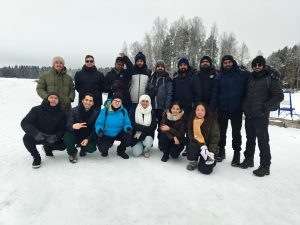
In my civic orientation classes, we often start by talking about what it really feels like to move abroad: the excitement, the confusion, the emotional ups and downs. Those shifting emotions are completely normal. And it’s okay to feel all of them.
We explore Hämeenlinna together. We visit museums and walk through the city centre. We discuss Finnish history as well as local history. I’ve found that when people understand the background of a place, they start to understand its people better, too.
We also invite guest speakers — professionals who speak about housing, family life, employment services, and other practical matters that are essential when building a life here.
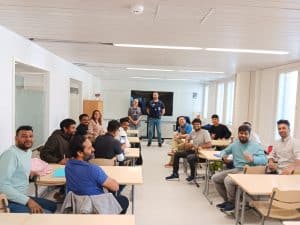
And of course, we experience something Finnish together. Sometimes it’s food — ruisleipä or karjalanpiirakka. Sometimes it’s winter activities: riding a potkukelkka, walking on the frozen lake, skiing, or skating. These shared experiences bring people together and help Finland feel a little less foreign.
Even if you’re not attending civic orientation classes, you can still explore. Read about Finnish culture and history. Listen to Finnish music. Visit museums. Walk in the forest. Swim in a lake. And definitely try the sauna.
In my next article, I’ll write about culture shock in the workplace — what happens when you start working in Finland and things feel… different. Stay tuned.
 Anna Kolata
Opin-mentor, Quickly to Work – Language Aware Integration Coaching ESF+ project and civic orientation teacher
Civic Orientation in the City of Hämeenlinna
Moving to a new country is exciting. Everything feels new and full of possibility. You’re curious, motivated — maybe even a little impatient to begin your new life. You want to find your place in society. You start learning Finnish. You hope to make Finnish friends.
And then reality gently taps you on the shoulder.
Finnish isn’t quite as easy as you expected. Finnish people may not be as talkative as you imagined. And sometimes it’s hard to read what they’re feeling — those famous Finnish poker faces can be surprisingly difficult to interpret.
I know this because I’ve been through it myself.
Today, I lead civic orientation classes for newcomers in Hämeenlinna. But my own journey with the City of Hämeenlinna began much earlier (you can read more about that here — although my role looks a little different these days).
I firmly believe it’s easier to understand the challenges of moving to a new country when you’ve experienced them firsthand. That’s why I share my story with the participants in my classes. If I could do it, so can you. I hope my experience offers both encouragement and inspiration.
Civic orientation is your gateway to everyday life in Finland
Learning the language is important — of course it is. But it’s only one piece of the puzzle. Understanding the culture, history, and everyday life of the country matters just as much. When you learn how things evolved and why society functions the way it does, many things begin to fall into place.
In my civic orientation classes, we often start by talking about what it really feels like to move abroad: the excitement, the confusion, the emotional ups and downs. Those shifting emotions are completely normal. And it’s okay to feel all of them.
We explore Hämeenlinna together. We visit museums and walk through the city centre. We discuss Finnish history as well as local history. I’ve found that when people understand the background of a place, they start to understand its people better, too.
We also invite guest speakers — professionals who speak about housing, family life, employment services, and other practical matters that are essential when building a life here.
And of course, we experience something Finnish together. Sometimes it’s food — ruisleipä or karjalanpiirakka. Sometimes it’s winter activities: riding a potkukelkka, walking on the frozen lake, skiing, or skating. These shared experiences bring people together and help Finland feel a little less foreign.
Even if you’re not attending civic orientation classes, you can still explore. Read about Finnish culture and history. Listen to Finnish music. Visit museums. Walk in the forest. Swim in a lake. And definitely try the sauna.
In my next article, I’ll write about culture shock in the workplace — what happens when you start working in Finland and things feel… different. Stay tuned.
Anna Kolata
Opin-mentor, Quickly to Work – Language Aware Integration Coaching ESF+ project and civic orientation teacher